Ban Me Thuot
After 1960, Viet Cong activity picked up in the jungles around Ban Me Thuot. But most missionaries felt that the VC, not wanting to incur the displeasure of their Montagnard friends, would not harm the foreigners.
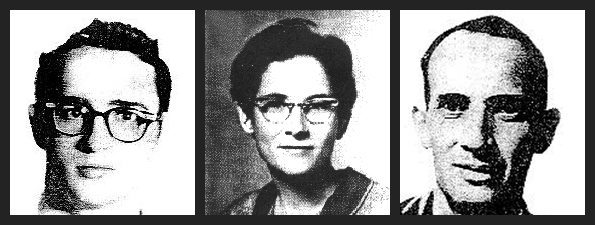
Three new missionaries arrived at the leprosarium to help with religious and agricultural work. Archie and Betty Mitchell were teachers. Young Dan Gerber, a Mennonite peace missionary, supervised the farm where ambulatory patients and hospital employees worked. Young Gerber, who came from rural Ohio, fell in love with one of the nurses, Ruth Wilting.
In April 1962, while Dan and Ruth were planning their wedding, Doctor Vietti accompanied an ill missionary home to the United States -- her first trip back in about five years. John Dick, a Mennonite missionary doctor at Nha Trang, took over in her absence. Dr. Vietti spent most of her six-week "vacation" studying at the U.S. Public Health Service hospital for leprosy patients in Carville, Louisiana. She returned to the leprosarium just in time to help Archie and Betty Mitchell celebrate their 15th wedding anniversary.
Early Wednesday morning, 30 May 1962, Archie Mitchell and a missionary's son discovered three burned bridges on the road into Ban Me Thuot. Beside one ruined bridge they saw a warning sign: FIX THIS BRIDGE AND OFF WILL GO YOUR HEAD.
Mitchell reported this to Dr. Vietti and the other missionaries. All agreed it did not refer to them as they were not there to harm anyone. The Viet Cong had never evidenced any ill feeling toward the resident missionaries nor the Leprosarium. It seemed in the best interest of all concerned for the personnel assigned there to continue their medical ministry. Dan Gerber jumped on his tractor and left to start repair work.
Late that afternoon, Dan took his fiance for a walk. Dr. Vietti was in her room, nursing a painful leg ulcer. It was almost time for the staff prayer meeting, a Wednesday evening activity, and that night it was to be at Dr. Vietti's house across the compound.
It was about 7:45 P.M. on Wednesday evening [May 30, 1962] when approximately twelve armed men, Viet Cong in black pajamas, appeared on the compound. Dividing into three groups, one accosted Dan Gerber and tied him up. Another band went directly to the house of Archie Mitchell, the administrator. Ordering him out of the house, they tied him up and led him away to join Dan Gerber. The third group crossed over to Dr. Vietti's house and ordered her to the location just outside the compound where Archie and Dan were being held.
For the next two hours the intruders rifled the houses, taking sheets, towels, clothing and anything of value. About then that evening they departed in one of the hospital vehicles. Not a shot had been fired. Nor had they attempted to molest any of the Vietnamese or the four missionary nurses on the compound.
But their orders were explicit to Mrs. Mitchell and the nurses: they must leave the Leprosarium the following day and not return. The Communists demanded and received keys to the staff pickup truck. They ordered Dr. Vietti, Archie Mitchell, and Dan Gerber into the truck. Then the Viet Cong drove away with their captives.
After The Capture
The missionaries who had been left behind informed authorities in Ban Me Thuot the next morning. Almost at once the Foreign Department initiated behind-the-scenes efforts to secure the release of the three. U.S. military advisers joined South Vietnamese soldiers in a search-and-rescue operation. When they got within sight of the abductors and saw they had been heavily reinforced, the American commander reluctantly decided not to attack. He notified Alliance headquarters in Saigon that the rescue attempt would only bring heavy loss of life. Optimism for their early return waned as months went by with little information.
The missionaries who had been living at the leprosarium moved to houses within the Alliance compound at Ban Me Thuot. Tribal nurses continued to keep the hospital open with medicines and supplies obtained from the mission clinic.
During the years following their capture, fierce battles were fought in the area. Still, tribesmen coming in from the jungle brought encouraging stories. One Montagnard said he had seen the three captives alive in a mobile VC prison camp. The Americans immediately went out and found the hospital complex where it was reported to be located, but it had already been evacuated. A woman told of seeing two white men and a white woman with a group of VC; the white woman had asked for a Bible. In 1967, Allied soldiers over-ran a VC jungle hospital and found prescriptions which they claimed only an American doctor could have written. Alliance leaders kept up a continual diplomatic offensive. The American, International, Cambodian and North Vietnamese Red Cross organizations were asked to help. An appeal for intervention was made to VC political representatives in Cuba and Algiers. Other pleas went to Russia, Switzerland, and the International Control Commission.
Betty Mitchell and her children stayed in Ban Me Thuot until October 1967, then left for a furlough. She arrived home proclaiming confidence that her husband, Dr. Vietti, and Dan Gerber would be released. Later, Mrs. Mitchell returned to Viet Nam to help operate a dispensary, which was then the base of leprosy ministries through the Central Highlands.
In Ban Me Thuot, Ruth Wilting resumed work on her wedding dress, believing that she would soon be reunited with her fiance, Dan Gerber.
Early in January 1968, Viet Cong and North Vietnamese soldiers began attacking villages around Ban Me Thuot. Wounded and fleeing Montagnards crowded into the town. Some came to the Alliance clinic for treatment and counseled the American missionaries to leave. None did.
On 30 January 1968, the Communists launched their murderous Tet offensive throughout South Viet Nam. A force of North Vietnamese soldiers over ran the Alliance compound at Ban Me Thuot. Six missionaries were killed, two wounded, and two captured. Gerber's fianc?e was one of those killed; the nurse was machine-gunned as she leaped into a bunker fashioned from a garbage pit.
Keeping The Faith
A verse of Scripture to which Mrs. Mitchell found her Bible open on the night the Viet Cong took away her husband has been a continual comfort to her. The words on the top left corner were a part of Zechariah 9:12: "Ye prisoners of hope: even to day do I declare that I will render double unto thee."
The prayers of so many Christians all around the world continue to be an encouragement to Mrs. Mitchell. She is confident that the three are having opportunity "to show forth the love of Christ" where they are. "Just pray that the Lord will keep them faithful, and that in the testings they face they will have the assurance that God is there and has a ministry for them."
Dr. Nathan Bailey, C&MA President, notes that the three have been held by the Viet Cong as long or longer than any other captives of the war. "This test of our faith reinforces the assurance we have that God does hear our cries and in 'due season' will give the answer," he says with conviction. "Let us not lose our confidence. Let us trust for the answer which must surely come."
Ten Years Later
Ten years after the capture of their father effected visible changes for the four Mitchell children: Rebecca married the son (a medical student) of Rev. and Mrs. Ed. Thompson (who were both martyred in the 1968 Tet offensive at Ban Me Thuot); Loretta was attending college in the Pacific Northwest; Glenn completed high school in Malaysia; and Geraldine, who slept peacefully in her crib through most of the terror of that long-ago night, was growing into a fine young lady.
In the ten years since Dan Gerber's capture, some major -- and some saddening -- changes effected his family back home. In 1968 Dan Gerber's father was killed on their Ohio farm in a tractor accident. Dan's mother continued to occupy the farmhouse after the death of her husband. Dan's oldest brother bought the farm and lives with his wife and two small daughters in a house trailer on the property. Dan's other three brothers and one sister live in Ohio and Michigan, one of the brothers, at that time, hoping to return to Mexico to continue his humanitarian work there.
Gerber and Mitchell
Daniel Amstutz Gerber was born on 14 August 1940, and was a member of the Mennonite Central Committee. His Home City of Record is Dalton, Ohio.
Archie Emerson Mitchell was born 01 May 1918 in Franklin, Nebraska. After graduating from high school, he attended Simpson Bible College and Nyack Missionary College. Two days before Christmas 1947, Mitchell and his bride, Betty Patzke Mitchell, sailed for Indo-China for two terms of missionary service with the Vietnamese people at Dalat. Mitchell's third term assignment was the Leprosarium at Ban Me Thuot, South Vietnam, which he joined as part of the Christian and Missionary Alliance. Mitchell's Home City of Record is Ellensburg, Washington.
Sources
The above is a compilation of excerpts from articles written by: James C. Hefley, Today's Health - April 1970; and H. Robert Cowles, The Alliance Witness -- May 24, 1972 ... kindly provided to me by Pam Young, The Northwest Veterans Newsletter. Be sure to visit Pam's wonderful tribute to Dr. Vietti.
Biographical information
provided by pownetwork.org and taskforceomegainc.org; photos obtained from
taskforceomegainc.org. To read poetry written in honor of Gerber,
Mitchell, and Vietti, go here.